News Story
Stuart Licht: "Powering Tomorrow Towards a Sustainable Energy Future"

Much of Dr. Licht’s work focuses on solar-powered hydrogen generation. He pointed out to the audience that by using chemical, rather than solid-state, solar energy conversion, there is a convenient pathway to not only convert the sun’s rays to electricity, but to also provide for storage of that energy. By using multiple layers of semiconductors to absorb many different wavelengths of light, in combination with effective chemical solutions, Dr. Licht has developed highly efficient ways to generate hydrogen with solar energy. He proposed a combination of photoelectro and photothermal processes to achieve maximum efficiency. Dr. Licht has demonstrated the possibility of efficiencies as high as 30%, and he believes that with combining solid-state and thermochemical conversion, efficiencies above 50% can be achieved.
Dr. Licht also discussed his work in energy storage, a crucial component of a sustainable energy future. A new class of battery he was worked on, the super-iron battery, can both store energy at a high density and provide high levels of power.
Dr. Licht concluded with the well-know quote from Jules Verne about “water (being) the coal of the future”. Audience members questioned the practicality of Licht’s use of a sodium hydroxide solution, and he acknowledged that it is highly-corrosive, and this is a necessary challenge to address before the technology could be commercialized. Dr. Licht also discussed how, by raising the temperature of water, hydrogen generating efficiencies could be improved. When asked how efficient this was, considering the added energy to heat the water, Dr. Licht noted that this heat can come from the infrared wavelengths of light, which compose 25-35% of energy in the solar spectrum, and which although not absorbed by photovoltaics and can be collected very efficiently with thermally absorbing media.
Published March 11, 2008
Recent Stories
Stories / Apr 19, 2024
CEEE Publishes Paper About “Cool” Technology
Stories / Apr 3, 2024
Next-Generation Batteries Could Come with Lower Production...
Stories / Mar 26, 2024
International Energy Cooperation Center Established at...
Stories / Mar 26, 2024
Maryland Researchers Awarded $1.5 Million to Pioneer Batteries...

Stories / Mar 25, 2024
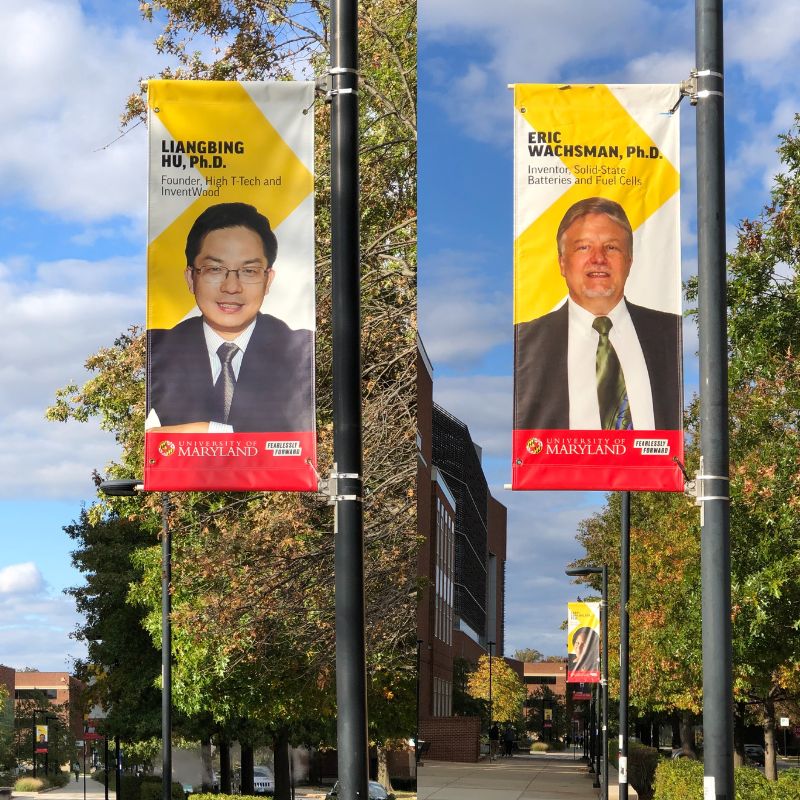
Liangbing Hu and Eric Wachsman Graced UMD’s Innovation Gateway
Stories / Feb 26, 2024
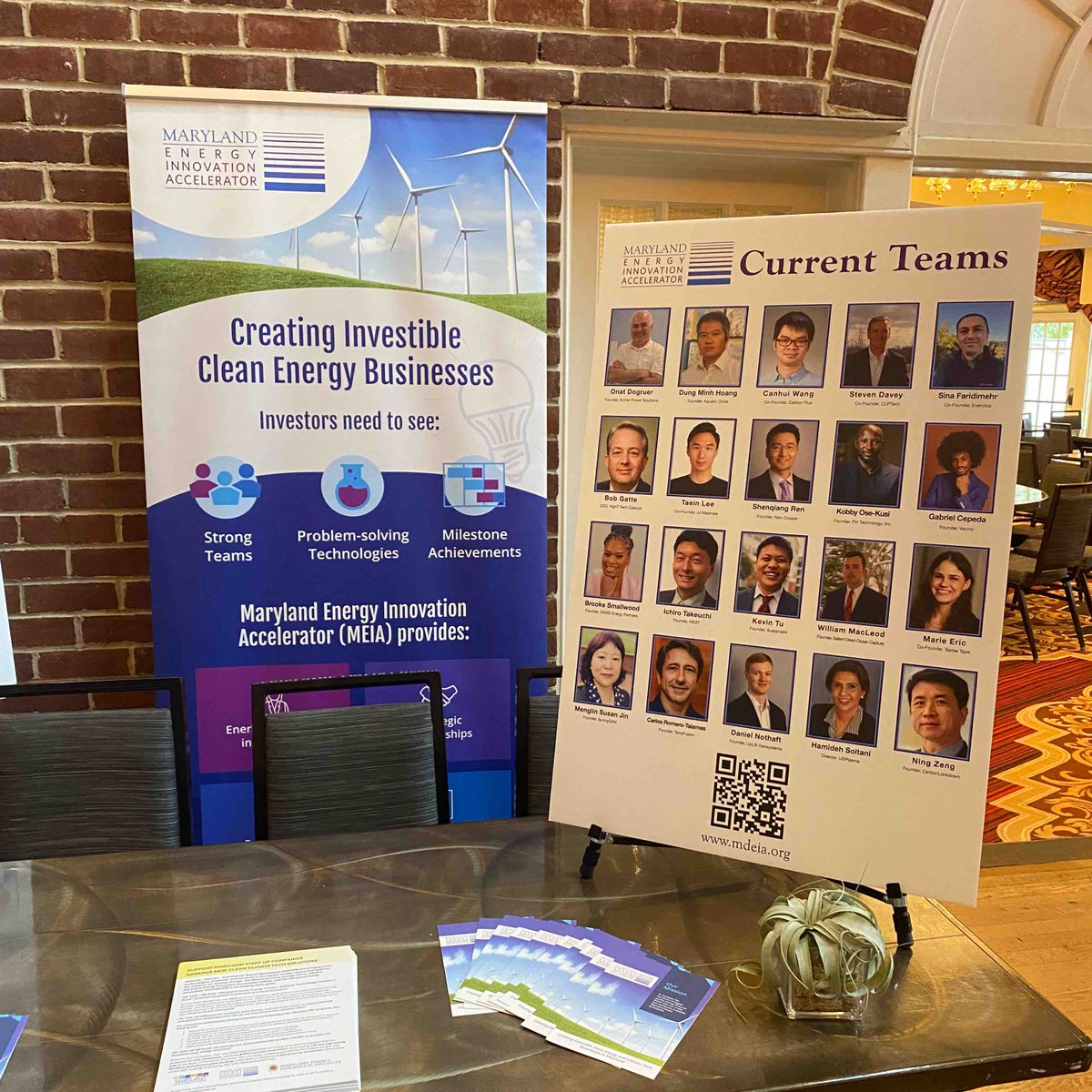
$15 Million Climate Catalytic Capital Fund Launched
Stories / Feb 9, 2024
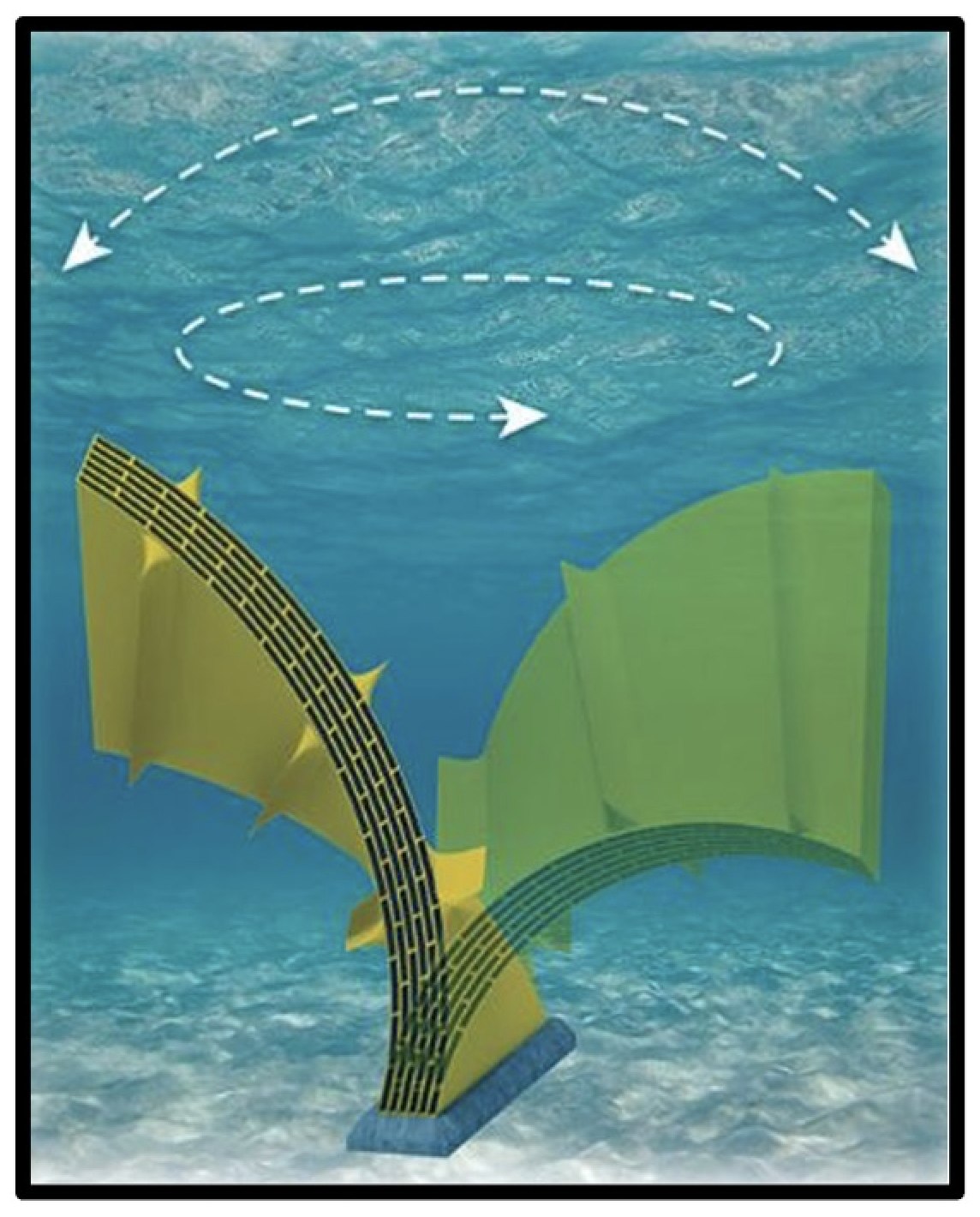
Twisting & Shouting for Clean Energy
Stories / Jan 17, 2024
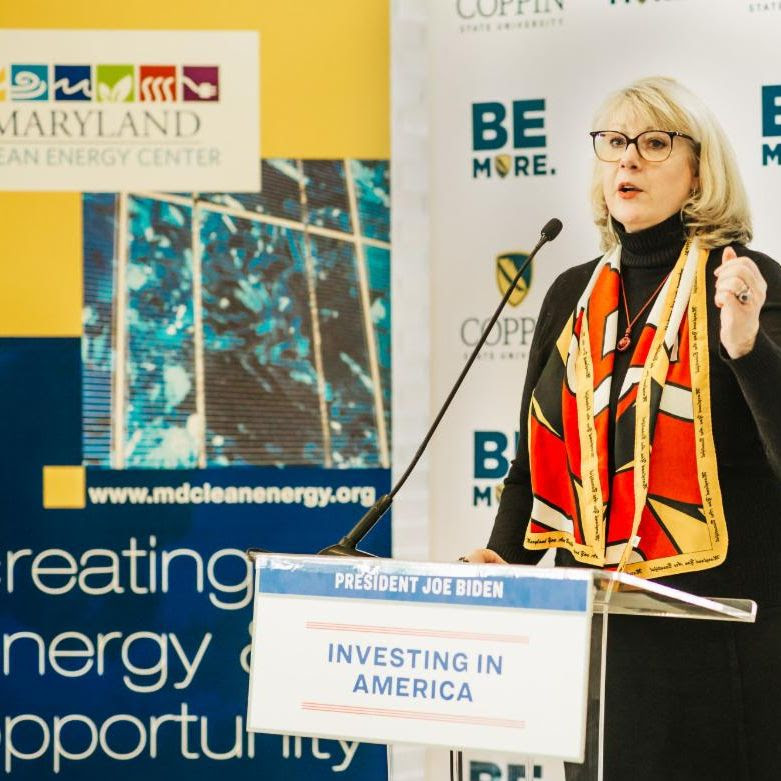
$15M Federal Grant Awarded to Support Maryland Electric Vehicle...
Stories / Jan 12, 2024
Lighter, Safer and Stronger Batteries Could Power the Smart...
Stories / Jan 9, 2024
Safer Electric Vehicles Could Come Soon After this Recent...